
Pudendal Neuralgia Treatment: Innovative Options at AZCCPP
Pudendal neuralgia is a debilitating condition characterized by chronic pain in the pelvic region due to irritation or entrapment of the pudendal nerve. This nerve, which runs from the lower back through the pelvis, controls sensations and functions in the genitals, rectum, and perineum. At the Arizona Center for Chronic Pelvic Pain (AZCCPP), we specialize in advanced treatments for this often-misdiagnosed disorder.
Our team, led by Dr. Michael Hibner, has developed new surgical methods, including a modified transgluteal pudendal neurolysis (which relieves pressure on the pudendal nerve), selective pelvic vein ligation for pelvic congestion syndrome, and removal of mesh from the groin and pudendal nerve areas. These approaches have helped countless patients regain their quality of life.
If you’re experiencing persistent pelvic pain, burning sensations, or discomfort during sitting, you may be dealing with pudendal neuralgia. In this guide, we’ll cover everything you need to know about pudendal neuralgia treatment, from symptoms and diagnosis to conservative and surgical options. Our goal is to empower you with knowledge so you can make informed decisions about your care.
Symptoms and Diagnosis of Pudendal Neuralgia
Pudendal neuralgia often presents with a range of symptoms that can significantly impact daily activities. Common signs include:
- Sharp, burning, or shooting pain in the pelvic area, genitals, or rectum.
- Pain that worsens with sitting but improves when standing or lying down.
- Numbness, tingling, or hypersensitivity in the affected regions.
- Sexual dysfunction, such as pain during intercourse or erectile issues in men.
- Bowel or bladder problems, like urgency or incontinence.
- Muscle spasms in the pelvic floor.
These symptoms can mimic other conditions, such as interstitial cystitis, endometriosis, or sciatica, making diagnosis challenging. According to the Cleveland Clinic, pudendal neuralgia affects both men and women, though it’s more commonly reported in women due to factors like childbirth or pelvic trauma.
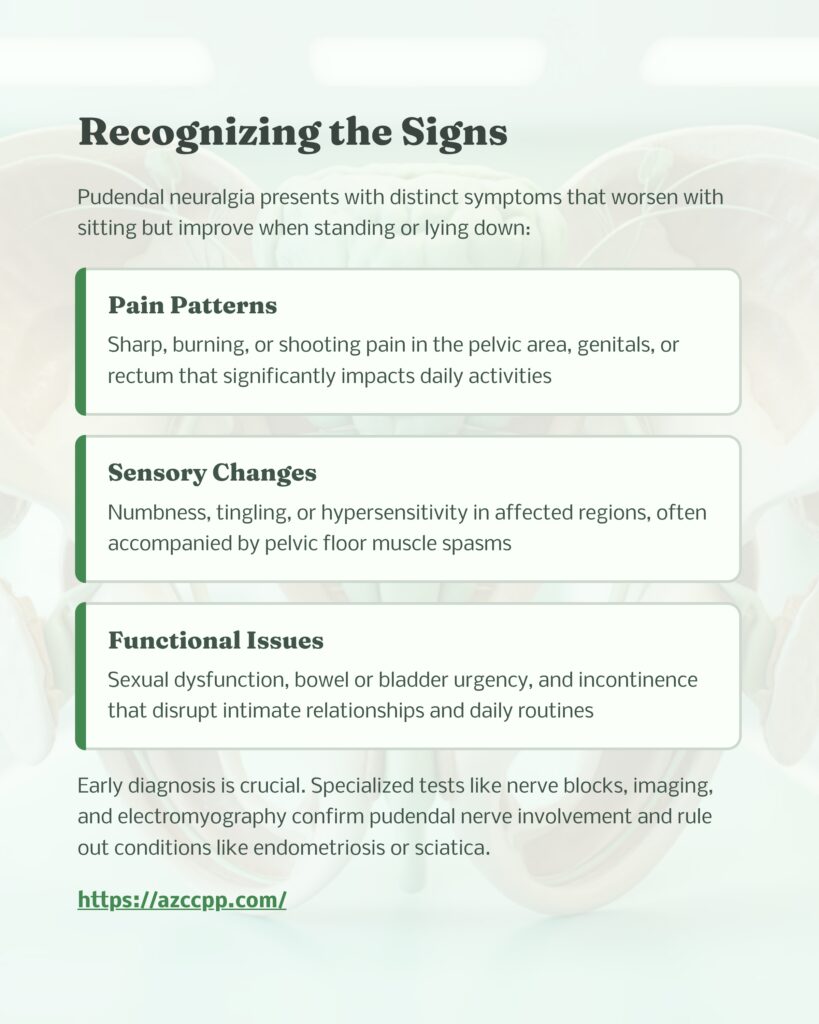
Diagnosis typically begins with a thorough medical history and physical exam. At AZCCPP, we use specialized tests to confirm pudendal nerve involvement:
- Pudendal Nerve Motor Latency Test (PNMLT): Measures nerve conduction speed.
- Nerve Blocks: Injections of local anesthetics to temporarily numb the nerve; relief confirms the diagnosis.
- Imaging: MRI or CT scans to identify entrapments, such as from scar tissue, ligaments, or veins.
- Electromyography (EMG): Assesses muscle activity in the pelvic floor.
Early diagnosis is crucial, as untreated pudendal neuralgia can lead to chronic pain syndromes. If you suspect this condition, please consider consulting a specialist promptly. For more on related pelvic issues, explore our guide on pelvic congestion syndrome and its links to pudendal neuralgia.
Non-Surgical Treatments for Pudendal Neuralgia
Many patients find relief through conservative, noninvasive treatments before considering surgery. At AZCCPP, we tailor these options to your specific needs, often combining therapies for optimal results.
Physical Therapy and Lifestyle Modifications
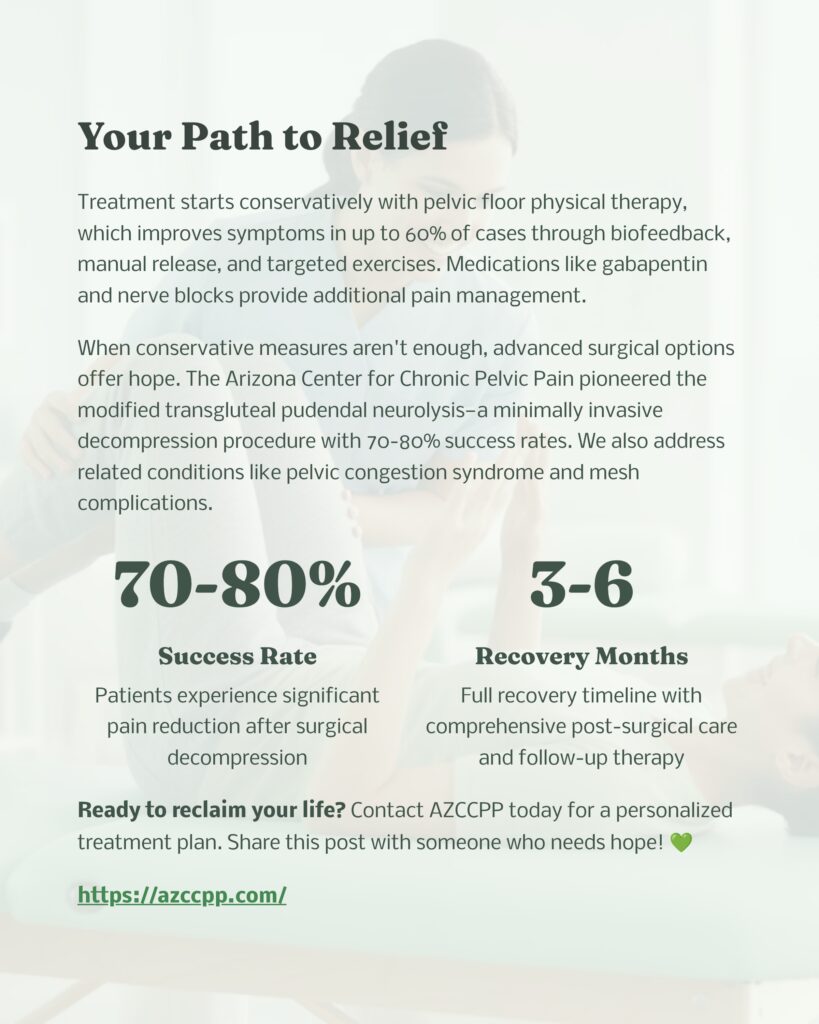
Pelvic floor physical therapy is a cornerstone of treatment for pudendal neuralgia. Specialized therapists use techniques such as biofeedback, manual release, and exercises to relax tight muscles and reduce nerve compression. NHS studies indicate that physiotherapy can improve symptoms in up to 60% of cases.
Key exercises include:
- Diaphragmatic breathing to reduce pelvic tension.
- Gentle stretches for the piriformis and obturator internus muscles.
- Kegel exercises modified to avoid over-tightening.
Lifestyle changes also play a role:
- Avoid prolonged sitting; use cushions or standing desks.
- Maintain a healthy weight to reduce pelvic strain.
- Incorporate anti-inflammatory diets rich in omega-3s.
For detailed exercises, consult trusted resources such as the NHS guide on pudendal neuralgia.
Medications and Injections
Pharmacological options help manage pain and inflammation:
- Neuropathic Pain Medications: Drugs like gabapentin, pregabalin, or amitriptyline target nerve pain.
- Anti-Inflammatories: NSAIDs such as ibuprofen for mild cases.
- Muscle Relaxants: To ease pelvic spasms.
Nerve blocks, as detailed in NCBI’s StatPearls, involve injecting anesthetics and steroids near the pudendal nerve for temporary relief, often lasting weeks to months. At AZCCPP, we offer ultrasound-guided injections for precision.
If nonsurgical approaches aren’t enough, learn more on our dedicated page on non-surgical pudendal neuralgia treatments.
Surgical Treatments for Pudendal Neuralgia
When conservative measures fail, surgery may be necessary to decompress the pudendal nerve or address underlying causes. AZCCPP is at the forefront of these innovations, having pioneered techniques that minimize invasiveness and maximize outcomes.
Pudendal Nerve Decompression
Our primary procedure is the modified transgluteal pudendal neurolysis, a more effective method for freeing the nerve from entrapment by structures such as the sacrospinous ligament or Alc. This surgery involves a small incision in the gluteal area for access, reducing recovery time compared to traditional methods.
Success rates are promising: Research shows 70-80% of patients experience significant pain reduction. Dr. Hibner has performed hundreds of these procedures, tailoring them to individual anatomies.
For a deeper dive, visit our page on pudendal nerve decompression surgery.
Addressing Related Conditions
Pudendal neuralgia often coexists with other pelvic disorders:
- Pelvic Congestion Syndrome (PCS): Dilated pelvic veins can compress the pudendal nerve. Our selective pelvic vein ligation targets specific veins, improving blood flow and alleviating pain.
- Mesh Complications: Surgical mesh from prior hernia or prolapse repairs can irritate the nerve. We specialize in safe removal from the groin and pudendal areas, often combined with decompression.
These techniques, as explored in the medical literature, address root causes and provide holistic relief. Explore our resource on pelvic mesh removal and its role in pudendal neuralgia.
Patient Outcomes and Success Stories
At AZCCPP, patient success is our measure of excellence. Many report 50-90% pain improvement post-treatment, with enhanced mobility and quality of life. Anonymized case studies include:
- A 45-year-old woman with post-childbirth neuralgia who achieved full relief after decompression.
- A man with mesh-related pain who returned to work after removal surgery.
Recovery timelines vary: Non-surgical options show results in weeks, while surgery may take 4-6 months for full benefits. We provide comprehensive post-care, including follow-up therapy.
Frequently Asked Questions (FAQs)
What is the best pudendal neuralgia treatment?
It depends on severity; start with non-surgical options like PT and medications. For persistent cases, surgical decompression offers long-term relief.
How long does pudendal neuralgia surgery recovery take?
Most patients resume light activities in 2-4 weeks, with full recovery in 3-6 months.
Can pudendal neuralgia go away on its own?
Rarely does early intervention prevent worsening.
Is pudendal neuralgia common?
It affects 1 in 100,000 people, but underdiagnosis is an issue.
For more FAQs and symptoms, see our page on pudendal neuralgia symptoms and causes.
Ready to take the next step? Contact AZCCPP today for a consultation and a personalized treatment plan for pudendal neuralgia.